West Asia War LIVE: U.S. Destroys Two Iran Drones Targeting Hormuz Shipping Amid Rising Tensions

West Asia War LIVE: U.S. Destroys Two Iran Drones Targeting Hormuz Shipping Amid Rising Tensions
The latest developments in the West Asia War LIVE situation have intensified concerns across the international community after the United States announced that it destroyed two Iran drones allegedly targeting commercial vessels in the strategically important Strait of Hormuz.
The incident has once again highlighted growing Iran-U.S. tensions, increasing fears of a wider regional conflict that could impact global trade, energy markets, and international security. As one of the world’s most important maritime corridors, any threat to Hormuz shipping immediately attracts global attention.
According to reports, the U.S. military acted to neutralize the aerial threats before they could pose a danger to vessels operating along critical Gulf shipping routes. The event has become one of the most significant developments in the ongoing West Asia conflict, raising new questions about regional stability.
U.S. Says It Destroyed Two Iran Drones Targeting Hormuz Shipping

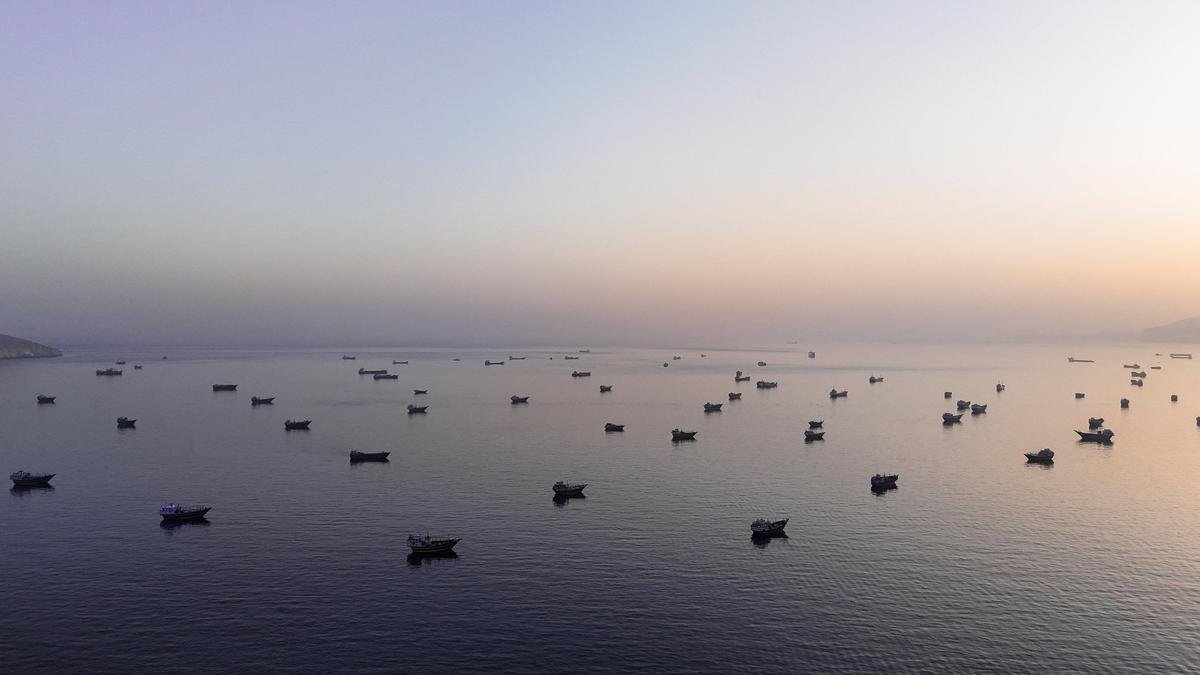
 The biggest headline emerging from the region is clear: U.S. says it destroyed two Iran drones targeting Hormuz shipping in a move aimed at protecting international maritime traffic.
Officials indicated that the drones were detected operating near strategic waterways used by commercial vessels. Following threat assessments, U.S. forces reportedly launched defensive actions that successfully eliminated both aerial
US Destroys Two Iranian Drones Targeting Hormuz Shipping as 2026 Iran War Grinds On
CENTCOM’s June 7 confirmation marked one incident in a broader pattern: despite a ceasefire framework signed weeks earlier, Iran has continued targeting commercial vessels in the Strait of Hormuz, triggering repeated rounds of US retaliation
What CENTCOM Confirmed
On June 7, 2026, US Central Command confirmed that American forces had destroyed two Iranian drones that were targeting commercial shipping in the Strait of Hormuz. The intercepts were framed by US officials not as an isolated defensive action, but as part of a broader effort to suppress Iran’s ability to track vessel movements and coordinate further drone or missile launches — an approach defense analysts describe as treating the strait as a sustained operational theater rather than a series of one-off incidents.
Why This Keeps Happening: The Broader War
This drone intercept didn’t occur in isolation — it’s one incident within the 2026 Iran war, a conflict that began on February 28, 2026, when the United States and Israel launched joint military operations against Iran under the code name Operation Epic Fury. The war’s opening strikes killed Iran’s Supreme Leader Ali Khamenei, triggering hundreds of retaliatory missiles and thousands of drones fired by Iran across the Middle East in the weeks that followed. That phase of active war concluded on May 5, but tensions in the Strait of Hormuz never fully subsided.
The Fragile Ceasefire
A memorandum of understanding (MoU) reached between the US and Iran in June 2026 was meant to reopen the Strait of Hormuz to normal shipping and formally end the war. Instead, Iran has continued asserting what analysts describe as an attempt at hegemonic control over the strait — repeatedly warning vessels to use only pre-approved routes and, when ships haven’t complied, following through on threats by firing at them. On July 6-7 alone, Iran struck three separate commercial vessels, testing the limits of the ceasefire and prompting fresh US strikes in response.
A Pattern of Attacks on Shipping
The scale of the disruption becomes clear when the individual incidents are tallied. Since the war’s start, Iranian forces or the Islamic Revolutionary Guard Corps (IRGC) have targeted a long list of vessels: the tanker Kiku, hit by a one-way drone while carrying more than 2 million barrels of crude; the Qatari LNG tanker Al-Rekayat, struck by a projectile near Oman’s coast; the Saudi-flagged supertanker Wedyan, damaged by an Iranian missile; and the CMA CGM San Antonio, struck by a cruise missile with eight crew members injured. On April 18, Iran formally announced it had closed the Strait of Hormuz altogether, following through with gunfire against Indian-flagged vessels and rocket attacks on container ships.
Before the war, roughly a quarter of the world’s seaborne oil trade and a fifth of global liquefied natural gas (LNG) passed through the strait. Tanker traffic collapsed to almost nothing in the war’s early phase as shipping companies rerouted to avoid both Hormuz and the Red Sea.
How the US Has Responded
Each significant attack on shipping has triggered a US military response. Following the July 6-7 attacks on three vessels, US forces struck Iranian military sites, and Washington revoked a license authorizing the sale of Iranian oil. Iran’s IRGC responded in kind, striking US military sites in Kuwait and Bahrain, prompting swift condemnation from Bahrain, Egypt, Kuwait, and eventually a wider Arab League statement led by Saudi Arabia.
President Trump, addressing the pattern directly, said continued Iranian strikes constituted a clear ceasefire violation, telling reporters: “I don’t like the fact that they took a shot yesterday, actually four of them.” Vice President JD Vance, addressing Iran through social media, said the country should “pick up the phone” if it objected to the ceasefire’s terms, warning that “violence will be met with violence.”
Iran’s Position
Iranian officials have pushed back on the framing that their actions violate the ceasefire. Ebrahim Azizi, who chairs Iran’s parliamentary national security commission, stated on social media that “the Strait of Hormuz is governed by Iran,” warning the US against further military action in the area.
International Involvement
The scale of disruption has drawn in countries well beyond the US and Iran. The United Kingdom hosted a 50-country conference in April focused on a plan to reopen the strait, and later deployed drones, fighter aircraft, and a Royal Navy warship as part of an international mission to secure commercial shipping through Hormuz. Australia’s navy signaled readiness to assist if called upon. Even China, whose leader Xi Jinping stated during an April call with Saudi Arabia’s Crown Prince that the strait “should remain open to normal navigation,” has weighed in diplomatically despite not being a direct party to the conflict.
The Economic Ripple Effects
The military exchanges in the strait transmit almost immediately into global commercial and financial systems. War risk insurance is one of the most sensitive channels: during periods of active confrontation, war risk surcharges for vessels transiting Hormuz can exceed 1% of a ship’s hull value per voyage — a cost that compounds quickly across the volume of tankers that normally use the route. Combined with rerouting costs and delivery delays, the repeated cycle of attacks and retaliation has kept energy markets on edge for months.
What This Means Going Forward
The June 7 drone intercept and the broader July 6-7 escalation illustrate the same underlying dynamic: a ceasefire framework exists on paper, but Iran’s continued willingness to target shipping — and the US’s consistent pattern of retaliating when it does — means the Strait of Hormuz remains an active flashpoint rather than a resolved one. With Trump himself signaling in subsequent July comments that he now considers the broader agreement “over,” the drone intercepts and tanker strikes recorded since February are likely to remain part of an ongoing, rather than concluded, chapter of the conflict.