House of the Dragon’ Season 3 Just Confirmed a Huge Change to One Character’s Ending

‘House of the Dragon’ Season 3 Just Confirmed a Huge Change to One Character’s Ending
House of the Dragon has never been shy about diverging from George R.R. Martin’s source material, but Season 3, Episode 4 just delivered a change with consequences that ripple all the way to the show’s ending. The apparent death of Aegon II’s dragon, Sunfyre, doesn’t just close out one storyline — it throws the fate of Queen Rhaenyra herself into question.
What Happened in Episode 4
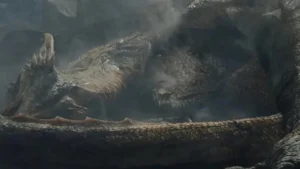
Episode 4 confirmed that Sunfyre was truly dead after weeks of speculation from readers of the books, with Aegon and Larys stumbling across the dragon’s remains while fleeing from Team Black. The moment landed as confirmation of something the show had already hinted at one episode earlier, when Rhaenyra’s forces reported that the only dragon spotted during an aerial search was Sunfyre, and that he appeared long gone and decaying. Seeing it play out on screen, rather than simply hearing it described secondhand, removed much of the ambiguity fans had been clinging to.
It’s a significant twist because, in Fire & Blood, Sunfyre’s story goes very differently. In the books, the dragon is severely wounded by Rhaenys’s dragon Meleys during the Battle of Rook’s Rest but survives, nursed back to flight by Criston Cole’s men over a slow and painful recovery, leaving both dragon and rider scarred but alive.
Why Sunfyre’s Survival Mattered So Much in the Books
Sunfyre’s recovery isn’t a minor detail in Martin’s original story — it’s the mechanism behind one of the Dance of the Dragons’ most infamous scenes. After a string of defeats and betrayals forces Rhaenyra to abandon King’s Landing and retreat to Dragonstone, she is eventually captured and brought before Aegon. In the book, Aegon has Sunfyre execute Rhaenyra in brutal fashion, burning her alive and devouring her body in front of witnesses. It’s one of the most grim endings for a protagonist anywhere in Martin’s Targaryen history, and it hinges entirely on Sunfyre being alive and able to fly by that point in the story.
With the show apparently killing off Sunfyre months ahead of schedule, that particular ending is no longer available to the writers — at least not in the way readers know it.
What This Means for Rhaenyra’s Fate
House of the Dragon has already established, through its connection to the original Game of Thrones series, that Rhaenyra dies at the hands of her brother’s dragon. That detail was referenced years ago in Game of Thrones itself, which means the show can’t simply write Rhaenyra a peaceful survival — continuity demands she meets a violent end involving a dragon, even if the show has now removed the dragon originally responsible.
That leaves the writers with a narrow set of options. One possibility is that Sunfyre isn’t actually dead, and Episode 4’s reveal is a misdirect aimed at book readers who think they already know what’s coming. Aegon’s own dialogue leaves a sliver of room for that reading, since he insists he can still sense life in his dragon even though Sunfyre hasn’t eaten in months and shows no visible signs of recovery. It’s a thin thread to hang a fakeout on, though, and would likely frustrate viewers who feel the show spent an episode selling a death that didn’t stick.
The more plausible route is that Aegon ends up bonded to a different dragon altogether by the time he finally confronts Rhaenyra. Most of Westeros’s dragons are already spoken for at this point in the story, but two wild dragons remain unclaimed, and the show has already planted the seeds for one of them to matter. The Cannibal, a massive and never-ridden dragon that has never bonded to a Targaryen rider, is known to lurk in the caves of Dragonstone — putting a very convenient, very dangerous replacement dragon within reach of the story’s remaining chapters.
A Pattern of Deliberate Departures
Sunfyre’s death isn’t an isolated swerve — it’s part of a broader pattern this season of House of the Dragon reshaping details from Fire & Blood in ways that carry real narrative weight. Season 3 has already restructured how Jacaerys Velaryon dies, merged the book character Nettles into Rhaena Targaryen’s storyline, kept Ser Gwayne Hightower alive well past his book death, and left Tyland Lannister’s fate deliberately unresolved after the Battle of the Gullet. Showrunner Ryan Condal has defended these choices as ways to deepen the show’s existing cast rather than introduce new characters late in the story, arguing that giving established Targaryens more to do makes for a tighter, more resonant adaptation.
Taken together, these changes suggest the writers are comfortable rewriting even the most iconic beats of the Dance of the Dragons, as long as the broader shape of the tragedy stays intact. Sunfyre’s apparent death is simply the boldest example yet, because it strikes directly at the ending fans have been anticipating since the show began.
What Comes Next
With Season 3 now past its midpoint and Season 4 already confirmed as the series’ final chapter, there isn’t much time left for House of the Dragon to resolve the question it just raised. Whether Sunfyre reappears in a weakened state, Aegon claims The Cannibal, or the show finds an entirely new path to Rhaenyra’s downfall, one thing seems certain: the queen’s ending is coming, and it may look nothing like the version readers have known for years.
House of the Dragon Season 3 is streaming now on HBO and HBO Max.