Israel and Lebanon Agree to Renew Ceasefire Agreement

Behind the Ceasefire Headlines: The Human Cost of Israel-Lebanon’s Collapsing Truces
While diplomats negotiate in Washington, more than a million displaced Lebanese and seven dead UN peacekeepers tell a different story about what “ceasefire” has meant on the ground in 2026
A Truce in Name Only
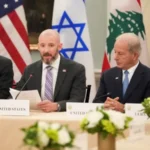
Every few weeks in 2026, headlines have announced a new Israel-Lebanon ceasefire — April 16, June 3, June 26. Each time, the agreement was framed as a step toward peace. Each time, fighting resumed within days or hours. For the people actually living along the border, these repeated announcements have meant something different than what the diplomatic language suggests: not peace, but a pause between rounds of violence.
How the Cycle Began
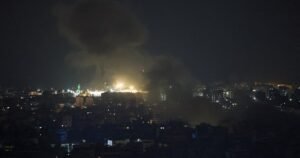
This pattern isn’t new to 2026 — it’s a continuation of a dynamic that started with the November 2024 ceasefire, itself reached after Israel invaded southern Lebanon and killed Hezbollah leader Hassan Nasrallah. That truce was supposed to end active hostilities. Instead, it became the template for everything that followed: Israel continued near-daily airstrikes it said targeted Hezbollah’s rebuilding efforts, while Hezbollah used the relative calm to quietly reconstitute its forces. Neither side treated the “ceasefire” as a full stop, and by March 2, 2026, the arrangement collapsed entirely into renewed full-scale war — a war that soon became entangled with the wider Iran conflict after Israel and the US struck Iranian targets on February 28.
The Numbers Behind the Diplomacy
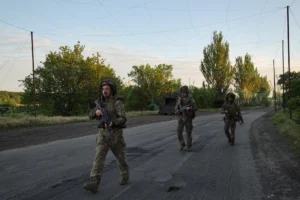
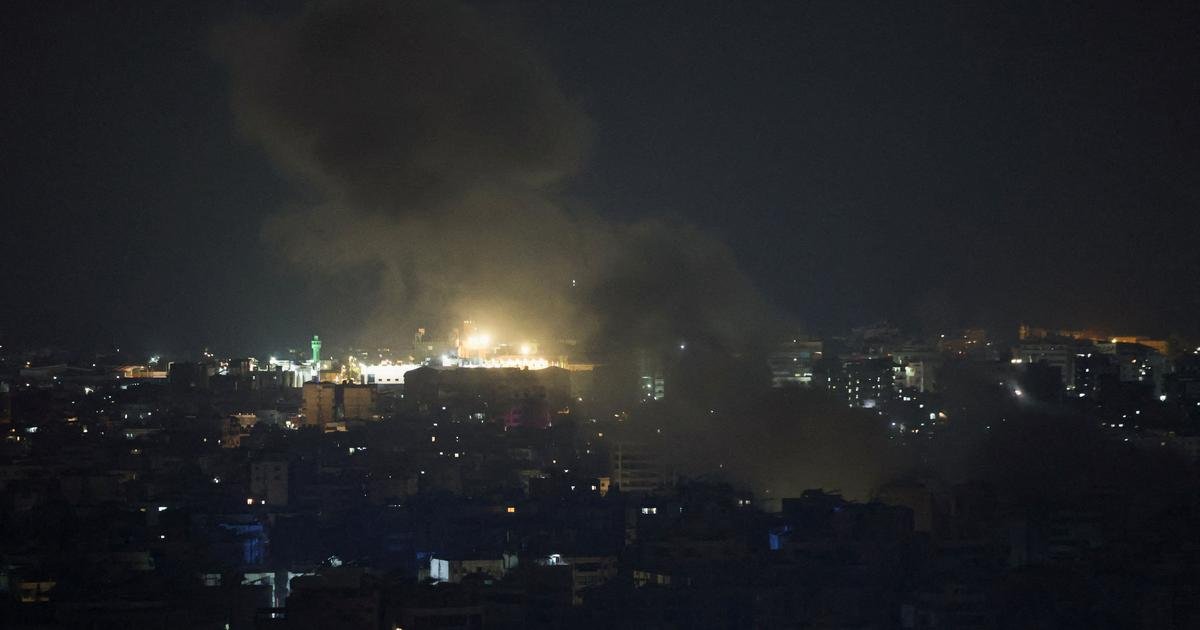
Since fighting resumed on March 2, 2026, Israeli strikes have killed more than 4,000 people in Lebanon. More than a million residents — over a fifth of Lebanon’s population — have been displaced from their homes. These aren’t abstract statistics; they represent entire communities uprooted multiple times as ceasefires are announced, broken, and renegotiated.
The pattern predates even this latest escalation. Between the November 2024 ceasefire and the resumption of full-scale war in March 2026, Israeli strikes described as targeting Hezbollah infrastructure killed 331 people, at least 127 of them civilians — deaths that occurred despite a truce technically being in effect the entire time. In other words, the current cycle of “ceasefire announced, then broken” isn’t a new development in 2026; it is, if anything, an acceleration of a dynamic already in place for over a year.
When Peacekeepers Become Casualties
Perhaps nothing illustrates the gap between ceasefire announcements and ground reality better than the toll on UNIFIL, the UN peacekeeping force stationed in southern Lebanon specifically to monitor compliance with past agreements. Days after the June 3 ceasefire was announced, a Serbian peacekeeper was killed and soldiers from El Salvador and Spain were wounded when mortar fire struck their position near Marjayoun — the seventh UNIFIL death since fighting resumed in March. A UN source said the mortars appeared to have originated from Hezbollah positions, though Hezbollah denied targeting the peacekeeping base and reaffirmed its “unwavering commitment” to UNIFIL’s role.
If a UN force explicitly present to monitor a ceasefire isn’t safe, it raises hard questions about what protection exists for ordinary civilians in the same areas — civilians who, unlike peacekeepers, have no mandate, uniform, or international attention drawn to their individual safety.
Two Deadly Days in June
The week following the June 3 announcement offered a stark illustration of the disconnect between diplomacy and battlefield reality. On June 5, Israeli strikes killed 32 people. The very next day, June 6, strikes killed 35 more — among the deadliest 48-hour periods of the entire conflict, occurring just days after both governments had publicly committed to de-escalation. That same day, a separate Israeli airstrike killed a Lebanese soldier and two officers, including a brigadier general, traveling on the Khardali-Nabatieh road. The Israeli military said it was investigating, noting the vehicle had been driving in an evacuation zone requiring prior coordination — without directly accusing Lebanese forces of failing to coordinate.
Displacement Without End
For civilians, the practical effect of a ceasefire that repeatedly collapses is that there is rarely a safe window to return home. Lebanese political figures have advised residents in affected areas to delay returning even after ceasefire announcements, precisely because the terms and stability of each agreement remain unclear in the days that follow. This creates a cycle: displacement triggered by fighting, followed by cautious hope after a ceasefire, followed by renewed displacement when the truce breaks down — sometimes within the same week.
This dynamic also complicates the work of humanitarian organizations. Aid access typically depends on relative calm, but when calm lasts only days before fresh strikes resume, sustained relief operations become difficult to plan or deliver reliably to the communities that need them most.
Domestic Dissent on Both Sides
The human toll isn’t the only sign that these agreements remain deeply contested. Inside Israel, the willingness to negotiate with Lebanon at all has drawn criticism — Rabbi Eliyahu Zini, uncle of Shin Bet chief David Zini, publicly challenged government ministers over the talks, questioning what he called giving up “the inheritance of our ancestors.” In Lebanon, Hezbollah supporters blocked roads with burning tires in Beirut’s southern suburbs after the June 26 framework was signed, treating the agreement not as relief but as a capitulation.
This dual rejection — hardliners on the Israeli side unhappy with any negotiation, and Hezbollah rejecting the terms as offered — helps explain why each ceasefire has struggled to gain durable political footing on either side of the border, independent of what happens militarily.
Why the Ceasefires Keep Failing
The recurring collapse isn’t due to any single violation — it reflects an unresolved structural disagreement. Israel has consistently demanded Hezbollah disarm and withdraw from southern Lebanon before Israeli forces leave. Hezbollah has just as consistently demanded the reverse: Israeli withdrawal first, arguing that disarming under occupation would amount to surrender. The April truce didn’t resolve this. Neither did the June 3 deal, nor the more detailed June 26 framework, which tied Israeli withdrawal to “verified disarmament” of Hezbollah — a sequencing Hezbollah rejected as clearly as it rejected the earlier terms.
Middle East analyst Ziad Majed of the American University of Paris has suggested Israel may be treating these ceasefires less as a genuine off-ramp and more as space to continue operations without formally ending them — a reading that, if accurate, would help explain why each truce has proven so short-lived.
The International Backdrop
Part of what keeps these talks alive despite repeated failure is pressure from outside the two countries. Iran has made a full Lebanon ceasefire a condition of its own separate negotiations with the US over the wider regional war, meaning progress or setbacks in Lebanon have ripple effects on an entirely different track of diplomacy. European leaders, including European Commission President Ursula von der Leyen, have welcomed each agreement publicly, underscoring how much international weight is riding on an arrangement that has yet to hold for more than a few weeks at a time.
What This Means Going Forward
For international mediators, each new ceasefire announcement is progress toward eventual peace. For families near the Lebanon-Israel border, the practical experience has been different: a truce is often only as durable as the time between one Israeli strike and the next escalation. Until the core disagreement over sequencing — who moves first, Israel or Hezbollah — is actually resolved rather than reworded in each new agreement, the human cost documented since March 2026 is likely to keep climbing, regardless of how many ceasefires are signed in Washington.