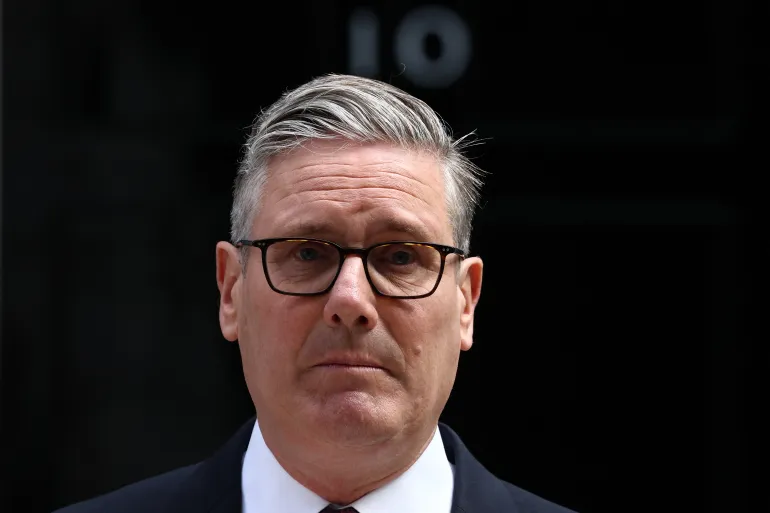
Why has Keir Starmer resigned as UK prime minister?

Why Has Keir Starmer Resigned as UK Prime Minister, and Who Will Replace Him?
British politics has been rocked by a major development after Keir Starmer resigned as UK Prime Minister, ending less than two years in office and triggering a new battle for Labour Party leadership. The announcement has dominated UK PM news and raised questions about Britain’s political future and who will take over after Keir Starmer. (Reuters)
The Keir Starmer resignation comes after months of pressure from within the Labour Party, poor election performances, and growing concerns over the government’s direction. Although Starmer will remain in office temporarily to ensure an orderly transfer of power, attention has now shifted to the upcoming Labour Party leadership race. (Reuters)
Why Did Keir Starmer Resign?
The question, “Why did Keir Starmer resign?”, has become one of the most searched topics in the United Kingdom.
According to reports, Starmer faced mounting criticism from Labour MPs and cabinet members after the party’s popularity dropped sharply. Recent local election defeats and the rise of Nigel Farage’s Reform UK further weakened confidence in his leadership. (Reuters)
The key reasons behind Keir Starmer resignation include:
- Declining public approval ratings.
- Internal Labour Party divisions.
- Poor local election results.
- Pressure from senior ministers and MPs.
- Lack of a clear political vision.
- Growing concerns about Labour’s chances in the next general election.
These challenges eventually led to Keir Starmer stepping down, with the Prime Minister saying he wanted an orderly transition rather than a prolonged leadership battle. (Reuters)
Keir Starmer Steps Down After Just Two Years
The news that Keir Starmer steps down marks another chapter in Britain’s recent political instability. Britain is now preparing for its seventh prime minister in just ten years, highlighting a decade of turbulence that began after the Brexit referendum. (Reuters)
Starmer came to power in 2024 with a landslide election victory that promised stability after years of Conservative governments. However, critics increasingly accused him of lacking direction and failing to inspire voters. (Reuters)
Despite efforts to improve economic conditions and strengthen Britain’s international relationships, dissatisfaction within the Labour Party continued to grow.
Reasons Behind Keir Starmer Resignation
1. Falling Popularity
Opinion polls showed some of the lowest approval ratings for a British leader in modern times. This decline alarmed Labour MPs who feared losing future elections. (Reuters)
2. Poor Election Results
Labour reportedly suffered heavy losses in local elections, increasing pressure on Starmer and his government. (New York Post)
3. Cabinet Resignations and Internal Pressure
Several senior figures questioned Starmer’s leadership, while former ministers publicly urged him to reconsider his position. (Reuters)
4. Rise of Political Rivals
The emergence of Reform UK and dissatisfaction among Labour supporters contributed to the crisis. (Reuters)
Who Will Replace Keir Starmer?
Following the UK Prime Minister resignation, the biggest question now is:
Who will replace Keir Starmer?
The Labour Party is expected to begin the formal process of selecting a new leader, with nominations opening in July. The new leader is expected to be in place before Parliament returns in September. (Reuters)
Several prominent figures are considered potential candidates.
Top Contenders
| Candidate | Current/Former Position |
|---|---|
| Andy Burnham | Former Greater Manchester Mayor |
| Wes Streeting | Former Health Secretary |
| Angela Rayner | Former Deputy Prime Minister |
| Yvette Cooper | Home Secretary |
| Shabana Mahmood | Justice Secretary |
Among these names, Andy Burnham has emerged as the strongest favorite. (The Times of India)
Andy Burnham Emerges as Front-Runner
Speculation about Andy Burnham next UK prime minister has intensified following endorsements from key Labour figures.
Former Health Secretary Wes Streeting has publicly backed Burnham and urged Labour members to unite behind him. This endorsement has significantly strengthened Burnham’s position in the Labour Party leadership contest 2026. (Reuters)
Burnham recently returned to Parliament after winning a seat, making him eligible to contest the leadership. Political analysts believe his popularity and experience make him the leading contender. (The Guardian)
How Does the Labour Party Leadership Race Work?
The Labour Party leadership race follows a structured process:
Step 1: Nominations Open
Candidates must secure enough support from Labour MPs.
Step 2: Campaign Begins
Candidates present their policies and vision for the country.
Step 3: Voting Process
Labour Party members vote to choose a new leader.
Step 4: New Prime Minister Takes Office
Because Labour holds a parliamentary majority, the winning candidate automatically becomes Prime Minister without requiring a general election. (Reuters)
What Happens Next for Britain?
The Keir Starmer latest news suggests that the transition will happen quickly to avoid political instability.
Major issues facing the next leader include:
- Economic growth.
- NHS reforms.
- Inflation and cost of living.
- Immigration policy.
- Relations with Europe.
- National security.
- Housing affordability.
The outcome of the Labour Party leadership contest 2026 could shape Britain’s direction for years to come.
Could There Be a General Election?
Many opposition leaders have called for a fresh general election after the UK Prime Minister resignation. However, under Britain’s parliamentary system, Labour can choose a new leader without immediately going back to the voters, as long as the party maintains its majority in Parliament. (New York Post)
Therefore, the next Prime Minister could take office without a nationwide vote.
Impact on UK Politics
The Keir Starmer resignation represents a significant turning point in modern British politics.
Experts believe the leadership change could:
- Reshape Labour’s priorities.
- Affect Britain’s economic policies.
- Influence foreign relations.
- Alter immigration strategies.
- Determine Labour’s prospects for the next election.
The coming weeks are expected to be crucial for the future of both the Labour Party and the United Kingdom.
Conclusion
The announcement that Keir Starmer resigned has opened a new chapter in British politics. Mounting pressure, declining popularity, and disappointing election results ultimately led to Keir Starmer stepping down after less than two years as Prime Minister. (Reuters)
As the Labour Party leadership race begins, all eyes are on Andy Burnham, who has emerged as the leading candidate and could soon become Britain’s next leader. While uncertainty remains, one thing is clear: the UK politics news landscape has entered a period of dramatic change.
FAQs
Why has Keir Starmer resigned as UK prime minister?
Keir Starmer resigned after facing growing pressure from Labour MPs, falling approval ratings, and poor election results.
Who will take over after Keir Starmer?
Andy Burnham is widely viewed as the front-runner, although several other Labour politicians may enter the leadership race.
What are the reasons behind Keir Starmer resignation?
Internal divisions, electoral setbacks, and declining public support were among the key factors.
Is Andy Burnham the next UK prime minister?
He is currently considered the leading candidate, but the Labour Party leadership contest will decide the outcome.
Will Britain hold a general election?
Not necessarily. Labour’s new leader can become Prime Minister without a general election if the party retains its majority in Parliament.