‘Hoarse’ Donald Trump Struggles to Read Teleprompter During White House Address

‘Hoarse’ Donald Trump Struggles to Read Teleprompter During White House Address
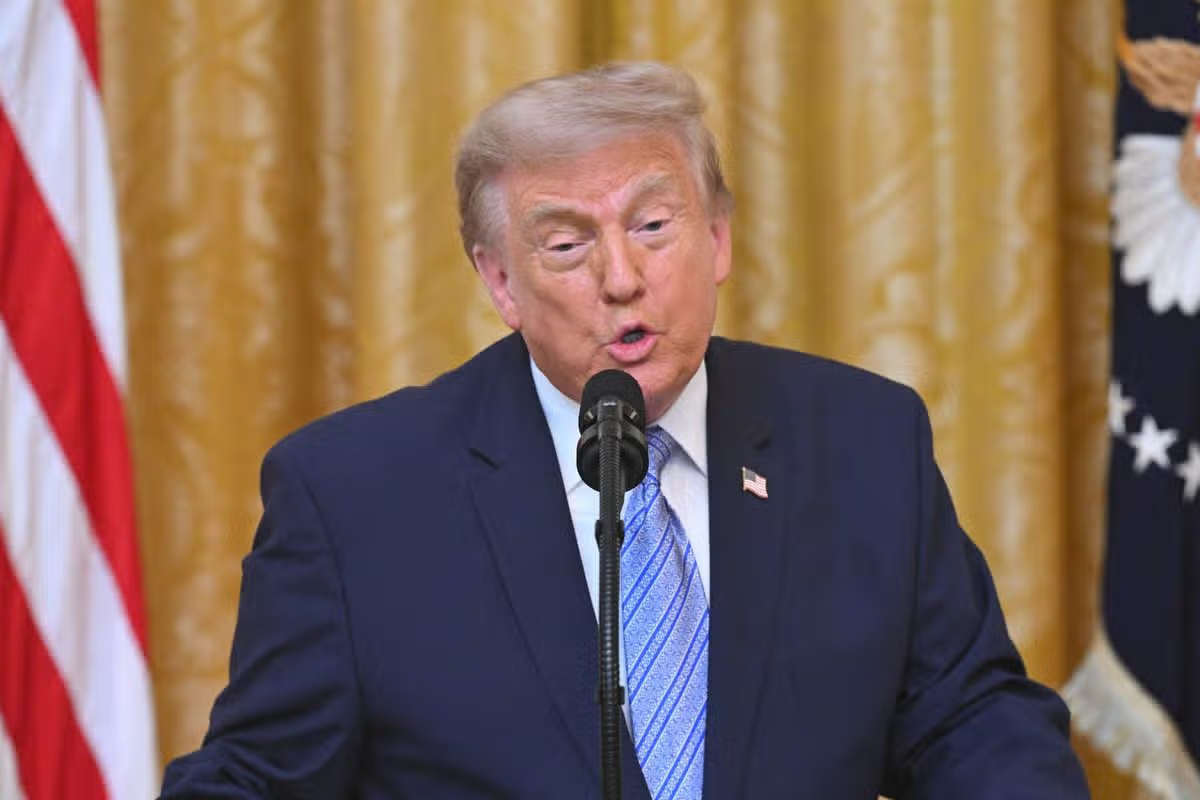
President Donald Trump delivered a primetime address to the nation from the White House on Thursday, July 16, but much of the online conversation that followed had little to do with the substance of his remarks. Instead, viewers zeroed in on the president’s noticeably hoarse voice and visible difficulty keeping pace with the teleprompter, reigniting a familiar cycle of speculation about the 80-year-old’s health and stamina.
What Happened During the Address
Trump’s roughly 25-minute primetime speech, delivered from the East Room of the White House, focused on what he described as vulnerabilities in U.S. election systems and renewed allegations of Chinese interference in the 2020 election.But almost as soon as he began speaking, social media users noted that Trump seemed to struggle with the teleprompter, repeating phrases and stumbling over words in a voice that sounded distinctly hoarse.
Clips of the moment spread quickly on X, with one widely shared post from journalist Aaron Rupar highlighting the president’s labored delivery. Reactions in the replies ranged from jokes about a new teleprompter operator to pointed suggestions that Trump’s rough voice was tied to shouting or poor sleep.Other viewers who watched the White House’s own livestream of the address were similarly unsparing, with one commenter dismissing the speech as little more than a recycled list of administration talking points delivered clumsily off the teleprompter.
This is far from the first time a Trump address has drawn scrutiny over teleprompter troubles. The president has stumbled through prompter malfunctions before, including a widely covered moment at the United Nations General Assembly the previous September, when the device cut out entirely and he was forced to stall for roughly 15 seconds before jokingly threatening the operator with unspecified trouble. Thursday’s address added a new wrinkle to that pattern: a voice audibly strained well before any technical hiccups even entered the picture.
A Teleprompter Operator Already Under Scrutiny
The optics of the evening were complicated further by an unrelated controversy involving the White House’s teleprompter operations. Just before the address, White House Press Secretary Karoline Leavitt confirmed that a teleprompter operator under federal investigation had been placed on unpaid leave and was not handling the device for Trump’s speech.The operator, identified through reporting as an employee of VIP Prompting — a company that has operated White House teleprompters since the 1960s — is accused of placing bets on the outcomes of more than a dozen Trump speeches over a three-month period on the prediction market platform Kalshi, including bets tied to the president’s State of the Union address.
Leavitt told reporters that Trump was aware of the situation and considered it “deeply unfortunate and, frankly, a disgrace.”Kalshi’s own enforcement team flagged the suspicious trading activity, which was subsequently referred to the Commodity Futures Trading Commission for investigation. With a new, less familiar operator running the prompter for Thursday’s speech, some online observers speculated that unfamiliarity with the device — rather than any issue with Trump himself — may have contributed to the delivery problems, a theory reflected in one social media comment joking that “his normal teleprompter guy is a bit tied up.
The Substance Behind the Delivery
Beyond the delivery issues, the speech itself covered ground Trump has returned to frequently throughout his second term. During the address, Trump announced the declassification of intelligence material he said revealed “shocking vulnerabilities” tied to hacking, exploitation, and foreign interference in U.S. elections, with supporting documents posted to the White House website as he spoke. He alleged that China sought to meddle in the 2020 election specifically to prevent his reelection, even though U.S. intelligence agencies concluded in a report declassified in 2021 that China ultimately chose not to pursue such influence efforts.
Trump also used the address to renew his push for the SAVE America Act, legislation that would require proof of citizenship and photo identification to register and vote in federal elections, and said he had directed the Department of Homeland Security to notify states about noncitizens on their voter rolls for removal. Fact-checkers quickly noted that despite the president’s claims of foreign interference, he did not present evidence that any entity, foreign or domestic, had manipulated votes, registration records, or election outcomes in 2020 — and did not even explicitly assert that the outcome had been altered.
The political reception broke down largely along familiar lines. Democratic Sen. Chris Coons characterized the address as amounting to frustration over Congress’s reluctance to advance the SAVE America Act, rather than a substantive presentation of new evidence. Republican allies, meanwhile, praised the president for following through on declassification promises, with some conservative commentators calling for even more disclosures related to alleged 2020 election irregularities.
A Pattern of Public Scrutiny
Thursday’s speech is the latest in a string of public appearances that have drawn commentary about Trump’s physical condition and delivery. Earlier in the year, during a prime-time address on U.S. military action against Iran, viewers similarly speculated that the president appeared to struggle with enunciation and pacing, prompting a wave of social media commentary at the time. That address, like Thursday’s, saw Trump’s team largely decline to directly address health-related speculation, instead focusing public messaging on the substance of the policy announcements themselves.
The White House has not issued any statement specifically addressing Trump’s voice or delivery during Thursday’s speech, and no medical explanation has been offered publicly. Presidents in their late 70s and 80s are not unusual in modern American politics, and hoarseness alone is a common and often benign symptom that can result from anything as simple as a cold, allergies, or a long day of public speaking engagements. Still, in an environment where every stumble is captured, clipped, and shared within minutes, even minor vocal strain has proven enough to dominate a news cycle that otherwise centered on one of the administration’s more significant policy announcements of the summer.
What Comes Next
With the SAVE America Act still facing an uncertain path through the Senate and the declassified election documents now under public and journalistic scrutiny, the substantive fight over Trump’s election security claims is likely to continue well beyond this news cycle. But for a White House increasingly conscious of how every public appearance is dissected online, Thursday’s address served as a reminder that delivery can just as easily overshadow message — regardless of who’s operating the teleprompter.