Israel and Lebanon Agree to Implement Ceasefire if Hezbollah Stops Attacks

Israel-Lebanon Ceasefire: What the June 3 Washington Agreement Actually Says — And Why Hezbollah Rejected It
A US-brokered deal to halt fighting in southern Lebanon collapsed within 24 hours after Hezbollah called its terms a “roadmap to annihilate part of the Lebanese people”
Israel-Lebanon Ceasefire What Happened
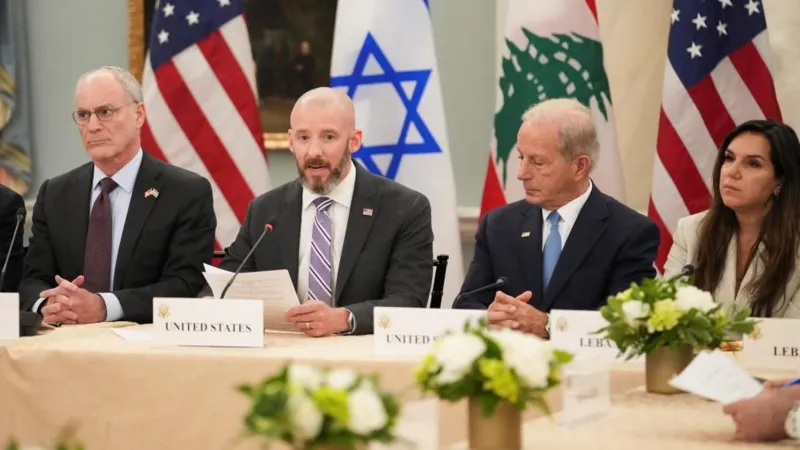
On June 3, 2026, Israel and Lebanon agreed to a full ceasefire following two days of talks at the US State Department in Washington, DC. Under the deal, Hezbollah would halt all attacks and withdraw its fighters from the area south of the Litani River, while Israeli forces would pull back from parts of southern Lebanon they currently occupy. The two sides also agreed to establish “pilot zones” — areas where the Lebanese Armed Forces would take exclusive control, with no Hezbollah presence permitted.
A joint statement from the US, Israel, and Lebanon said the steps were designed to enable progress toward a comprehensive peace and security agreement, and reaffirmed that the future of the Israel-Lebanon relationship must be decided by the two sovereign governments.
Background: How the Fighting Restarted
This round of conflict is a resumption of hostilities that trace back to October 2023, when Hezbollah opened a front against Israel in solidarity with Hamas after the Gaza war began. A year of cross-border fighting led to a full Israeli invasion of southern Lebanon in October 2024, which ended with a US-brokered ceasefire that November — but not before Israel killed longtime Hezbollah leader Hassan Nasrallah.
That truce didn’t hold cleanly. Between November 2024 and March 2026, Israel carried out near-daily strikes it said targeted rebuilding Hezbollah infrastructure, while Hezbollah gradually restored its own military capabilities in violation of the deal. Fighting escalated sharply again on March 2, 2026, drawing Israel into a fresh invasion of southern Lebanon and eventually pulling Hezbollah into the wider Iran war after Israel and the US struck Iran on February 28.
Hezbollah’s Rejection
The June 3 agreement fell apart almost immediately. On June 4, Hezbollah leader Naim Qassem rejected the terms, describing them as “a roadmap to annihilate part of the Lebanese people.” Qassem insisted any real ceasefire had to begin with a complete Israeli withdrawal from southern Lebanon, warning that as long as Lebanese villages were being bombed, northern Israel would not be safe.
A Hezbollah official later confirmed to AFP that the group’s position had been formally communicated to Lebanese authorities and passed on to Parliament Speaker Nabih Berri, a Hezbollah ally who acted as an intermediary in the talks.
Fighting Continued Despite the Deal
The rejection wasn’t just rhetorical. Just hours after the tentative agreement was announced, Israel launched fresh attacks, and Hezbollah said it would not accept any ceasefire that didn’t start with an Israeli withdrawal. Separately, the UN peacekeeping mission in Lebanon (UNIFIL) reported that a Serbian peacekeeper was killed and soldiers from El Salvador and Spain were wounded when mortars struck their position near Marjayoun. That brought the total number of UNIFIL peacekeepers killed since fighting resumed in March to seven.
Days later, on June 5 and 6, Israeli strikes killed 32 and 35 people respectively — among the deadliest single days of the renewed conflict. On June 6, an Israeli airstrike also killed a Lebanese soldier and two officers, including a brigadier general, traveling on the Khardali-Nabatieh road; the Israeli military said the incident was under investigation.
Why Hezbollah’s Position Matters
Hezbollah wasn’t a party to the Washington talks — the US does not negotiate directly with the group, which it classifies as a terrorist organization. But without its buy-in, the ceasefire has little practical force, since Hezbollah remains the primary combatant on the Lebanese side.
Iranian Revolutionary Guard Corps commander Esmail Qaani weighed in from Tehran, insisting Israel must first withdraw to its pre-war positions before any truce could hold. Iran has separately made a full Lebanon ceasefire a condition of its own negotiations with the Trump administration over the broader regional conflict — a linkage that briefly affected shipping through the Strait of Hormuz, which Iran opened and then re-closed to commercial vessels depending on the state of the Lebanon truce.
A Bigger Deal Followed — But Hezbollah Rejected That Too
The June 3 collapse wasn’t the end of the story. After further rounds of talks, Israel and Lebanon signed a broader framework agreement in Washington on June 26, brokered by Secretary of State Marco Rubio. That deal set out a “sequenced process” under which the Lebanese army would gradually restore control over Lebanese territory, contingent on the “verified disarmament” of Hezbollah — a condition the group has repeatedly rejected outright.
Israeli Prime Minister Benjamin Netanyahu welcomed the framework but made clear Israeli troops weren’t leaving yet, saying Israel would maintain its buffer zone “until Hezbollah disarms and as long as there is a threat to the State of Israel.” Qassem again rejected the deal, calling it “humiliating, shameful, and a surrender of sovereignty,” and Hezbollah supporters blocked roads with burning tires in Beirut’s southern suburbs in protest.
Not everyone on the Israeli side was satisfied either. Rabbi Eliyahu Zini, uncle of Shin Bet chief David Zini, publicly criticized the government for negotiating with Lebanon at all, questioning Israeli ministers over what he called giving up “the inheritance of our ancestors.”
International Reaction
The diplomatic effort drew a mixed but broadly supportive international response. European Commission President Ursula von der Leyen welcomed the agreement, emphasizing its potential to reduce violence and enable humanitarian relief. India’s Ministry of External Affairs also welcomed the initiative through spokesperson Randhir Jaiswal.
The Human Cost
The stakes behind the diplomacy are severe. Since fighting resumed on March 2, 2026, Israeli strikes have killed more than 4,000 people in Lebanon and displaced over a million residents — more than 20% of the country’s population. Humanitarian groups have repeatedly flagged the scale of displacement as one of the defining features of this phase of the conflict, compounding the destruction already caused by the 2024 invasion.
What Happens Next
With Hezbollah rejecting both the June 3 ceasefire and the June 26 framework, the core disagreement remains unresolved: Israel wants Hezbollah disarmed before it withdraws, while Hezbollah insists Israeli withdrawal must come first. Middle East analysts, including Ziad Majed of the American University of Paris, have questioned whether Israel is treating the ceasefire as a genuine step toward peace or simply cover to continue operations without addressing withdrawal at all.
Until Hezbollah and Israel find common ground on which side moves first, further rounds of talks — and further rounds of fighting — appear likely.