CDU/CSU Politician Calls for Baerbock Questioning

CDU/CSU Politicians Demand Baerbock Answer for Germany’s Failed UN Security Council Bid
After Germany’s surprise defeat in its bid for a non-permanent UN Security Council seat, conservative lawmakers want former Foreign Minister Annalena Baerbock to explain what went wrong before the Bundestag’s foreign affairs committee
What Happened
Germany suffered a clear defeat in its bid for a non-permanent seat on the UN Security Council in a vote held in New York in early June 2026. The scale of the loss caught many German officials off guard, given the country’s track record of successfully winning such seats in the past. In the aftermath, politicians from the CDU and CSU — Germany’s conservative bloc — began demanding that former Foreign Minister Annalena Baerbock be questioned before the Bundestag’s Foreign Affairs Committee to explain the loss.
Who’s Making the Demand
CSU foreign policy spokesperson Stephan Mayer led the call, insisting the causes of the defeat needed to be examined “without gaps.” Mayer said Baerbock must explain when and with what specific measures her ministry attempted to gather international votes for Germany’s candidacy — referring to the Foreign Ministry’s activities under Baerbock’s leadership between 2021 and 2025, the period during which the groundwork for the bid would have been laid. Mayer described it as “imperative” that Baerbock give an account of her ministry’s efforts directly to the Bundestag’s Foreign Affairs Committee.
Hesse’s Minister for European Affairs, Manfred Pentz (CDU), went further in placing blame directly on Baerbock personally. “Annalena Baerbock messed it up during her time as foreign minister,” Pentz said, arguing that the current government under Chancellor Friedrich Merz — in office for just one year — couldn’t reasonably be blamed for a defeat rooted in preparation that should have happened years earlier. Pentz pointed to Germany’s two previous successful Security Council bids, both of which occurred under Chancellor Angela Merkel, arguing those campaigns had been properly prepared in advance — implying the current loss reflects a preparation gap specific to Baerbock’s tenure rather than a broader structural issue.
Baerbock’s Current Position
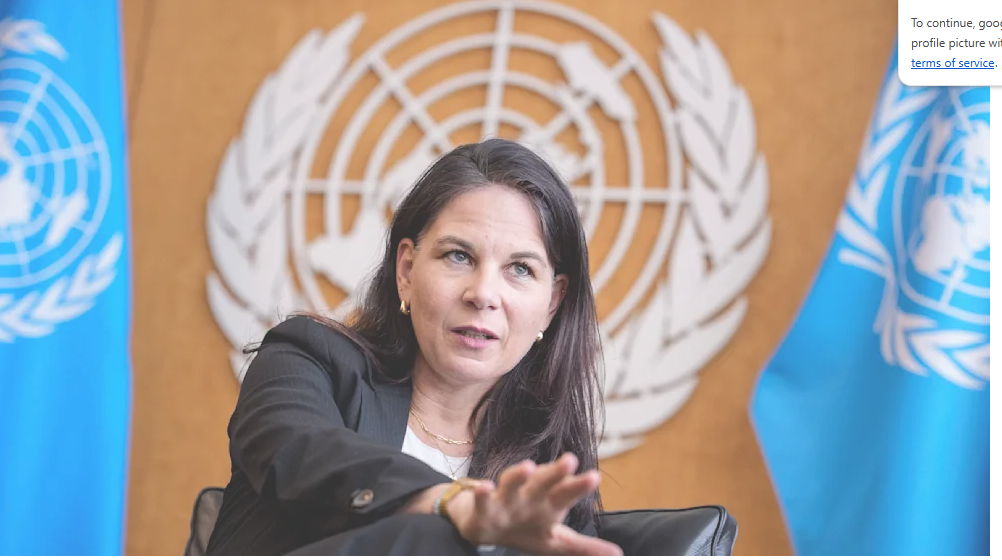
Baerbock currently serves as President of the UN General Assembly, a position she’ll hold until September 9, 2026. That means her return to Berlin — and any potential appearance before the Bundestag committee — wouldn’t happen until closer to that date, giving the political controversy time to develop, and giving both sides time to sharpen their arguments, before she would actually face questioning in person. Her continued UN role also means she has, for now, largely avoided responding directly to the criticism from German soil.
Not Everyone Agrees With the Framing
The push to blame Baerbock specifically hasn’t gone unchallenged. Some commentators have pushed back, arguing that while Baerbock does bear some responsibility for Germany’s declining international standing during her tenure, placing the “blame” for this specific defeat entirely on her is “dishonest.” These critics have instead pointed to current Foreign Minister Johann Wadephul and Chancellor Merz, arguing they and the current governing coalition bore “the greater part of responsibility” for the defeat, given that the vote took place under the current government’s watch and any last-mile diplomatic efforts to secure votes would have fallen to the sitting foreign ministry, not Baerbock’s former one.
This pushback highlights a familiar pattern in the dispute: opposition politicians assigning blame to a predecessor’s groundwork, while critics of that framing note that responsibility for a vote’s final outcome typically sits with whoever holds office at the time it happens.
Why the Vote Matters
Non-permanent Security Council seats are considered significant diplomatic wins, offering a country two years of participation in UN Security Council decisions on matters of international peace and security — decisions that shape everything from sanctions regimes to peacekeeping mandates. Germany’s defeat represents a notable setback given the country’s historical success in winning such seats; its two previous terms, both secured under Merkel, are being cited by CDU/CSU politicians as evidence that adequate advance preparation, sustained diplomatic outreach, and vote-gathering among UN member states make the difference between winning and losing these elections.
The loss also carries symbolic weight beyond the practical policy implications. For a country that has actively sought a larger role in global governance discussions — including periodic debate over whether Germany should hold a permanent Security Council seat — a clear defeat in a non-permanent seat election raises uncomfortable questions about how much diplomatic capital and international goodwill Germany currently commands.
Broader Political Context
The controversy arrives at a moment when Germany’s opposition and governing coalition are already trading blame over foreign policy more broadly. It also follows shortly after unrelated developments involving Ukraine diplomacy, where CDU figures have separately commented on Russia’s rejection of a proposed meeting between Ukrainian President Volodymyr Zelensky and Russian President Vladimir Putin — reflecting a broader pattern of foreign policy sparring between German political blocs during this period, with conservative politicians frequently positioning themselves as more assertive on international affairs than the current coalition.
What Critics on Both Sides Are Really Arguing
Stripped of the political point-scoring, the underlying dispute is fairly straightforward: CDU/CSU politicians argue that Germany’s UN bid failed because the diplomatic groundwork — building relationships with voting member states, securing commitments well in advance — wasn’t adequately done during Baerbock’s four years as foreign minister. Critics of that framing counter that a Security Council vote is won or lost based on active campaigning in the weeks and months immediately before the vote, which would have been the current government’s responsibility, not a legacy of the previous administration.
Neither side disputes that Germany lost the vote decisively. The disagreement is entirely about which government — and which foreign minister — bears responsibility for that outcome.
What Happens Next
Whether Baerbock will formally appear before the Foreign Affairs Committee, and when, remains to be determined — complicated by her ongoing UN role through September 9. In the meantime, the political back-and-forth over responsibility for the failed bid is likely to continue, with CDU/CSU figures maintaining that Baerbock’s tenure at the Foreign Ministry left Germany’s UN campaign under-supported, while critics argue the current government shares significant, if not primary, responsibility for the outcome. As with many disputes over foreign policy accountability in Germany, the resolution may ultimately depend less on new facts emerging and more on which political narrative gains more traction with the public in the months ahead.