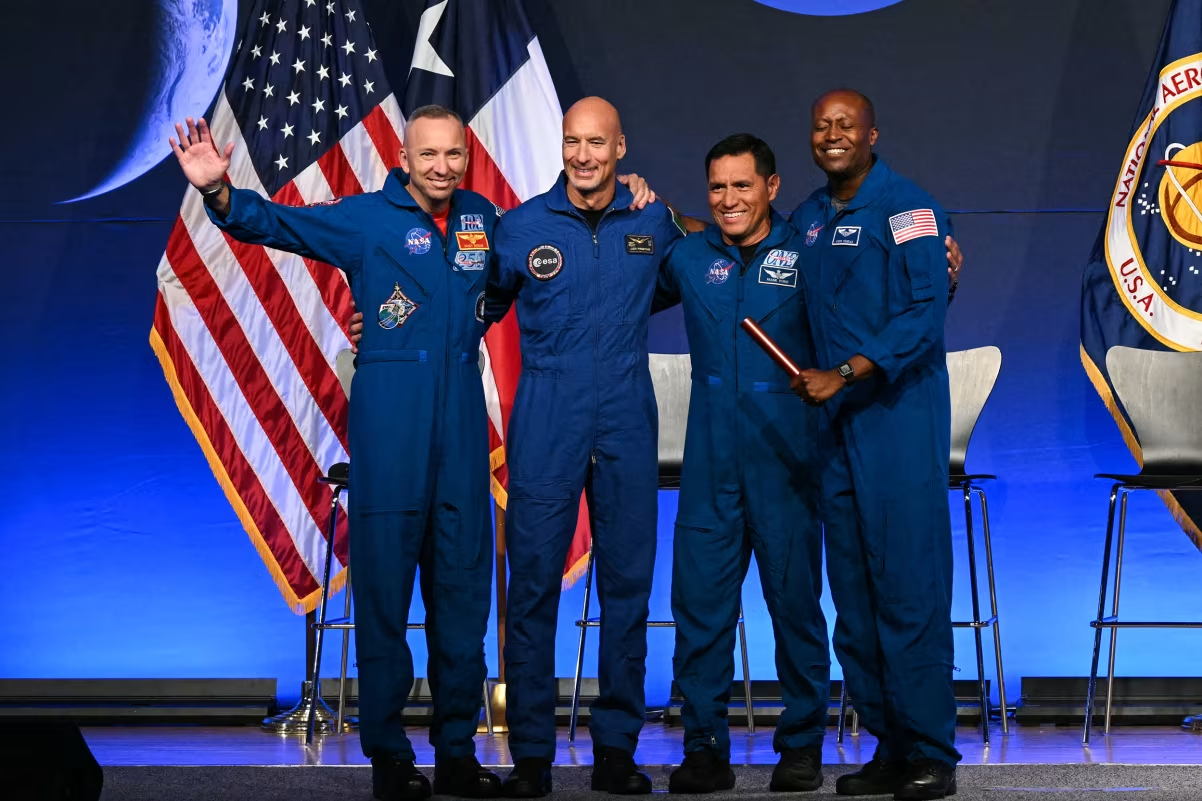
NASA Reveals Artemis III Crew for Historic Return to the Moon

NASA Reveals Artemis III Crew: The Next Big Step Back to the Moon
Humanity’s return to the lunar surface just took a major step forward. NASA has officially revealed the crew for Artemis III — the mission set to put astronauts back on the moon for the first time since Apollo 17 in 1972. It’s a historic announcement, and one that marks a real turning point in the agency’s long-term push toward sustainable lunar exploration.
Here’s what the mission is actually about, who’s involved, and why it matters far beyond a single moon landing.
A New Chapter in Space Exploration
Artemis III isn’t just about repeating Apollo’s biggest achievement — it’s about building something that lasts. Where Apollo missions were short, focused visits, Artemis III is designed as part of a broader strategy: developing the technology, infrastructure, and operational know-how needed to support long-term human activity on the moon.
In other words, this mission isn’t the finish line. It’s a foundation for everything NASA hopes to do next — including eventual crewed missions to Mars.
Meet the Artemis III Crew
Naturally, the biggest question on everyone’s mind is: who’s actually going? NASA’s selected astronauts bring an impressive mix of backgrounds, including military aviation, engineering, scientific research, spaceflight operations, test piloting, and advanced mission planning.
Every crew member has spent years in specialized training, and that diversity of expertise isn’t accidental — it’s designed to maximize both mission safety and scientific output once they’re on the lunar surface. As mission planning continues, the crew will go through extensive additional preparation covering every phase of the journey, from launch to lunar operations to return.
What the Mission Is Actually Trying to Accomplish
Artemis III’s goals go well beyond simply setting foot on the moon again. Key objectives include:
- Lunar Surface Exploration — visiting regions of the moon that have never been explored before
- Scientific Research — collecting geological samples and data that could reshape our understanding of the moon’s history
- Technology Demonstration — testing systems that will be essential for future long-duration missions
- Sustainable Exploration — laying groundwork for NASA’s long-term lunar presence
- Mars Preparation — using lessons from lunar operations to inform future Mars missions
Taken together, these objectives make Artemis III one of the most ambitious lunar missions ever attempted — not just a landing, but a proving ground for everything that comes after it.
Why the Artemis Program Matters
Artemis isn’t simply nostalgia for the Apollo era — it’s a deliberate effort to build on decades of scientific progress while opening doors for the next generation of explorers, engineers, and scientists. The broader program is driving advancements across space technology, robotics, communications systems, human spaceflight capability, and international scientific collaboration.
The success of Artemis missions could shape the direction of global space exploration for decades, influencing not just NASA’s roadmap but international partnerships and private aerospace development as well.
A Historic Return, With Modern Technology
The symbolic weight of returning to the moon is enormous — Apollo proved humanity could achieve something extraordinary, and Artemis is picking up that torch with tools Apollo-era engineers could only dream of. Modern astronauts will rely on advanced spacecraft systems, improved navigation, upgraded life-support technology, and far more sophisticated scientific instruments than anything available in the 1970s.
That technological leap is what allows NASA to pursue more ambitious science and longer-term goals than any previous lunar mission.
Beyond Artemis III: What Comes Next
While Artemis III is getting most of the attention right now, it’s only one piece of a much larger plan. NASA’s broader lunar strategy includes:
- Lunar Gateway — a space station orbiting the moon
- Surface Infrastructure — habitats and long-term support systems
- Resource Utilization — research into using lunar materials for future missions
- Extended Scientific Operations — longer missions built for greater scientific output
- International Partnerships — collaboration with global space agencies and private companies
Every phase feeds into NASA’s larger vision: not just visiting the moon, but establishing a sustainable human presence there.
Why Human Astronauts Still Matter
Even with major advances in robotics, human explorers bring something machines can’t fully replicate — real-time decision-making, hands-on equipment maintenance, complex scientific judgment calls, and flexible mission execution when plans need to change on the fly. Artemis III reflects NASA’s continued belief that combining human expertise with advanced technology produces the best results, whether that means adapting to unexpected surface conditions or making split-second calls during a critical mission phase.
A Story the World Is Watching
This announcement has quickly become one of the biggest stories in space news, drawing attention from governments, research institutions, private aerospace companies, and space enthusiasts around the globe. Part of that interest comes from what Artemis III represents beyond national achievement — it’s a shared symbol of humanity’s drive to explore beyond Earth, powered by international cooperation and decades of scientific progress.
Final Thoughts
With the Artemis III crew now revealed, the mission has shifted from a future ambition to a very real, very near-term milestone. Backed by ambitious scientific goals, a highly experienced crew, and a long-term vision for sustainable lunar exploration, NASA is preparing for a mission that could define the next era of human space exploration. The return to the moon isn’t a distant dream anymore — it’s happening.
Related Reading
On this site:
- More Space & NASA News (replace with your actual internal link)
External sources for NASA and space exploration coverage:
Note: Internal link is a placeholder — swap in your actual site URL. External links point to trusted, general space-news sections rather than a verified article on this specific crew announcement, since this was written without live web search access.