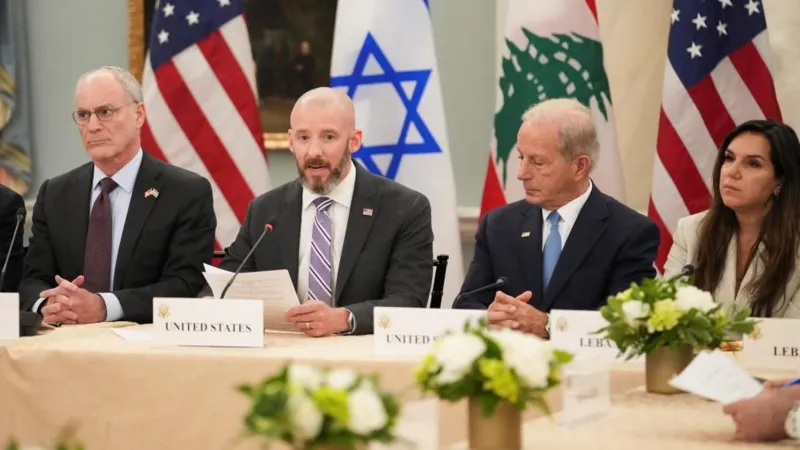
Israel and Lebanon Agree to Implement Ceasefire if Hezbollah Stops Attacks | West Asia War LIVE

Israel-Lebanon Conflict: The Complete Timeline From Nasrallah’s Death to the Failed 2026 Ceasefires
How a border war that began in solidarity with Gaza turned into one of the deadliest chapters in Israel-Lebanon history — and why every ceasefire attempt since has collapsed
The Origins: October 2023
The current chapter of the Israel-Lebanon conflict didn’t start in 2026 — it began in October 2023, when Hezbollah opened a front against Israel along the northern border in solidarity with Hamas following the start of the Gaza war. What began as limited cross-border exchanges gradually escalated into sustained military confrontation over the following year, drawing in a conflict that had actually simmered, on and off, since Hezbollah’s founding in 1982.
The Turning Point: Nasrallah’s Assassination
By September 2024, Israel had shifted from defensive skirmishes to a direct offensive, launching a campaign that dismantled much of Hezbollah’s senior leadership — including the assassination of the group’s longtime leader, Hassan Nasrallah. The following month, Israeli ground forces invaded southern Lebanon.
The First Ceasefire: November 2024
Israeli troops withdrew after a US-brokered ceasefire was reached at the end of November 2024. On paper, this ended the immediate invasion. In practice, the truce was fragile from the start — Israel continued near-daily airstrikes into Lebanon, which it said targeted Hezbollah’s efforts to rebuild its military infrastructure. Between November 2024 and March 2026, these strikes reportedly killed 331 people, including at least 127 civilians, according to tracked casualty figures. Meanwhile, Hezbollah quietly reconstituted its forces in violation of the agreement’s terms.
Renewed War: March 2026
The fragile status quo collapsed on March 2, 2026, when fighting escalated sharply again, drawing Israel into a fresh invasion of southern Lebanon. The timing wasn’t a coincidence — the renewed fighting became entangled with the broader Iran war that erupted after Israel and the US struck Iranian targets on February 28, 2026. Hezbollah, as Iran’s most powerful regional proxy, launched more than 1,300 waves of attacks on Israel in the following months, drawing the Lebanon front directly into the wider regional confrontation. Before this war began, Israel had held just five positions across the Lebanese border; by mid-2026, it occupied large stretches of southern Lebanon.
Talks Begin: April 2026
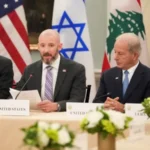
Direct peace talks between Israel and Lebanon opened in Washington on April 14, 2026 — a historic moment, marking the first such direct negotiations since the failed May 17 Agreement of 1983. The talks brought together Israeli ambassador Yechiel Leiter, Lebanese ambassador Nada Hamadeh Moawad, and US officials including Secretary of State Marco Rubio and envoy Michael Needham. Israeli Prime Minister Benjamin Netanyahu set the tone early, stating Israel wanted “the dismantling of Hezbollah’s weapons, and a real peace agreement that will last for generations.” Lebanese President Joseph Aoun expressed hope the talks would yield a ceasefire that could open the door to broader negotiations, while Lebanese Prime Minister Nawaf Salam said Beirut was “open to discussing any agenda, format or location for talks.”
Two days later, on April 16, a 10-day truce took effect — the first direct diplomatic agreement between the two countries in decades. It didn’t last long in its original form. By April 23, Trump announced a three-week extension of the truce. Yet by April 27, Hezbollah leader Naim Qassem was already stating the group would not revert to its pre-March positions, signaling the fragile deal was already under strain.
The June Collapse: A Pattern Repeats
By early June, talks had entered a fourth round in Washington, held over two days at the US State Department. On June 3, Israel and Lebanon agreed to a fuller ceasefire, including plans for “pilot zones” — designated areas where the Lebanese Armed Forces alone would operate, free of any weapons not belonging to the national army. Hezbollah rejected the deal within 24 hours, with Qassem calling the terms “absurd, humiliating and insulting” and warning that demanding his fighters leave southern Lebanon while under attack would mean “surrender, defeat and achieving the enemy’s goals.”
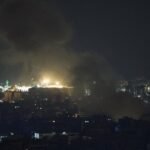
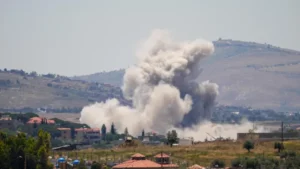
Fighting resumed almost immediately. Israeli strikes killed at least 10 people in southern Lebanon the same day the agreement was announced, and a UN peacekeeper — a Serbian soldier — was killed by mortar fire near Marjayoun days later, alongside wounded peacekeepers from El Salvador and Spain. It was the seventh UNIFIL death since the war restarted in March. Days later, Israeli strikes killed 32 people on June 5 and 35 on June 6 — among the deadliest single days of the renewed conflict. A separate strike on June 6 killed a Lebanese soldier and two officers, including a brigadier general, traveling on the Khardali-Nabatieh road, an incident the Israeli military said it was investigating.
The Framework Agreement: June 26
Weeks of further negotiation produced what US officials billed as the most substantial deal yet: a framework agreement signed in Washington on June 26, brokered by Rubio, alongside Leiter and Hamadeh. Unlike earlier attempts, this version didn’t demand simultaneous Israeli withdrawal — it tied Israeli disengagement to the verified disarmament of Hezbollah instead, describing a “sequenced process” meant to let the Lebanese army gradually restore “effective sovereign authority” over Lebanese territory.
Hezbollah rejected this too. Qassem called the agreement “humiliating, shameful, and a surrender of sovereignty,” and argued that linking Israeli withdrawal to his group’s disarmament “crosses all red lines.” Hezbollah supporters blocked roads with burning tires in Beirut’s southern suburbs in protest. Netanyahu, for his part, welcomed the framework as a partial win but made clear Israeli forces would stay in the buffer zone “until Hezbollah disarms and as long as there is a threat to the State of Israel” — meaning the framework’s central condition may never be triggered from either side.
Why the Pattern Keeps Repeating
Looking across the timeline, every ceasefire attempt since March 2026 has broken on the same fault line: Israel wants Hezbollah to disarm and withdraw before it pulls back its own forces; Hezbollah wants Israeli withdrawal first, arguing that disarming while under occupation amounts to surrender. Neither April’s truce, June 3’s deal, nor June 26’s framework has resolved that sequencing dispute — each has only reframed it. Middle East analyst Ziad Majed of the American University of Paris has argued that Israel appears to be treating these agreements “as just another one to allow them to continue their attacks,” rather than genuine steps toward withdrawal.
International Reactions
The diplomatic effort has drawn broadly supportive, if cautious, reactions abroad. European Commission President Ursula von der Leyen welcomed the ceasefire agreements, citing their potential to reduce violence and enable humanitarian relief. India’s Ministry of External Affairs, through spokesperson Randhir Jaiswal, also welcomed the initiative. Not all reactions inside Israel were positive, however — Rabbi Eliyahu Zini, uncle of Shin Bet chief David Zini, publicly criticized the government for negotiating with Lebanon at all, questioning ministers over what he described as giving up “the inheritance of our ancestors.”
The Toll So Far
By the numbers, this has become one of the costliest phases of the broader Israel-Hezbollah conflict since it began in 2023: more than 4,000 people killed in Lebanon from Israeli strikes, and over a million residents — more than a fifth of Lebanon’s population — displaced from their homes since the March 2026 escalation alone.
What to Watch Next
With the disarmament-versus-withdrawal deadlock still unresolved as of late June, further rounds of talks are expected — but so, analysts warn, is further fighting in between them. The pattern of the past four months suggests any durable ceasefire will require one side to move first on the issue it has so far refused to compromise on.