Zelenskyy Seeks Direct Putin Talks, Proposes Neutral Venue

Zelensky Calls on Putin for Direct Talks in Neutral Country — Putin Says “No Point” in Meeting
Ukraine’s president made his first direct public appeal to Putin since 2022, proposing Switzerland, Turkey, or an Arab state as a venue — only for Putin to reject the offer a day later at Russia’s flagship economic forum
Zelensky Putin Meeting: The Letter That Started It All
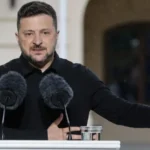
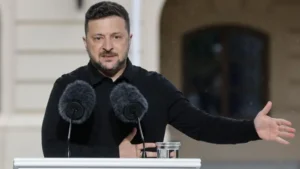
On June 4, 2026, Ukrainian President Volodymyr Zelensky published a public letter directly addressed to Russian President Vladimir Putin, calling for face-to-face negotiations to end their countries’ four-year war. It marked the first public message Zelensky had written directly to Putin since Russia launched its full-scale invasion in 2022, and doubled as a sweeping critique of Putin’s 26 years in power.
“Ukraine proposes ending this war through direct engagement between us – and you. I am proposing a meeting,” Zelensky wrote, adding that it should take place in a third country with a clear date set. This is the core of the Zelensky Putin talks proposal that has since dominated international coverage of the Russia-Ukraine war.
Zelensky’s Neutral Venue Proposal
A key detail in Zelensky’s letter was his explicit rejection of both Moscow and Kyiv as possible venues. Instead, he floated Switzerland, Turkey, or Arab states as potential neutral hosts for negotiations — a proposal consistent with how neutral-venue diplomacy has historically been used to reduce symbolic advantage for either side in major international disputes.
Why Zelensky Made the Move Now
Zelensky’s timing appeared deliberate on two fronts. First, he pointed to shifting US priorities, arguing it would be wrong to simply wait for the Trump administration to refocus on ending the Ukraine war while it remained “fully focused on the issue of Iran.” Second, he was addressing a moment of relative Ukrainian battlefield momentum — Ukraine has reportedly regained some leverage through improved long-range strike capabilities, even as Russia has simultaneously intensified aerial attacks across the country, exploiting Ukrainian air-defense shortages.
As part of his push for renewed Russia Ukraine peace talks, Zelensky also made specific claims about Russian losses, saying Russia suffered more than 30,000 soldiers killed or seriously wounded in May alone, and that Ukraine had “video confirmation” of sustained monthly losses at that scale.
Proposed Terms for Negotiations
Beyond requesting the meeting itself, Zelensky laid out concrete steps he said Ukraine was prepared to take immediately: a full ceasefire for the duration of any negotiations, and an all-for-all prisoner exchange as a first move toward ending the conflict. He also called for the return of Ukrainian civilians and children taken during the war.
Notably, Zelensky reiterated that traveling to Moscow himself remains a non-starter, citing what Ukrainian security services describe as multiple foiled Russian-sponsored assassination attempts against him — a detail that underscores just how far apart the two sides remain even on basic meeting logistics.
Putin Rejects Zelensky: “No Point” in Meeting
Putin didn’t address the letter directly in his main speech, but responded when asked about it during a panel discussion at the St. Petersburg International Economic Forum the following day, June 5. His answer was blunt: he saw “no point” in meeting Zelensky “for now.”
“The only point is for the Ukrainian side to stop the advance of our armed forces, that’s it,” Putin said. “But we need agreements … let the experts do the work, work out some solutions, and after that, we can meet up … sign some documents.” He also called Zelensky’s letter “rude” and questioned whether its real intent was to ensure no meeting actually takes place. Putin maintained that Zelensky is still welcome to come to Moscow — the same venue Zelensky had already ruled out.
Zelensky Fires Back at Putin’s Response
Zelensky responded the same evening in his nightly video address, calling Putin’s rejection a “weak response” that would “disappoint many in the world.” He argued the reply showed Russia was “once again choosing war.”
He also pushed back on Putin’s claims about Russia’s economic resilience — a pointed jab, given that Russia’s economy contracted 0.2% in the first quarter of 2026, its first quarterly decline in three years, amid war costs and Western sanctions. “The world has not grown tired of Ukraine, as you long hoped it would,” Zelensky said. “But there is growing fatigue with Russia.”
Why a Direct Zelensky-Putin Meeting Has Been So Elusive
This isn’t the first attempt at high-level engagement in 2026. Earlier in the year, US-brokered trilateral talks were held in Geneva in February, led on the ground by negotiators rather than the two presidents themselves — Ukraine’s delegation headed by Rustem Umerov, Russia’s by Vladimir Medinsky. Those talks, which addressed issues including the Donbas region and the Zaporizhzhia Nuclear Power Plant, made only incremental progress and reportedly stalled on their second day, with lead US negotiators Steve Witkoff and Jared Kushner notably absent from the final session.
That earlier round underscores the core obstacle now facing Zelensky’s direct appeal: Russia’s insistence on retaining occupied Ukrainian territory, a demand Kyiv has consistently refused to accept. Putin’s condition that Ukraine first “stop the advance of our armed forces” before any leader-level meeting effectively asks Ukraine to concede battlefield gains before negotiations even begin — a nonstarter for Kyiv given the momentum it currently holds.
Russia’s Economic Pressure Point
Zelensky’s public jab at Russia’s economy wasn’t incidental. Russian Deputy Prime Minister Alexander Novak had separately described the country’s economy as being in a “state of controlled cooling” — language Zelensky appeared to be directly countering when he suggested global fatigue was shifting toward Russia rather than Ukraine. This economic subtext adds another layer to why the timing of Zelensky’s proposal, right in the middle of Russia’s showcase investment forum, appeared calculated to maximize pressure on the Kremlin.
What Happens Next in the Russia-Ukraine Peace Process
Putin left the door open to a future meeting, but only once “agreements” are already in place for leaders to formally sign — inverting Zelensky’s proposal that a meeting itself should be the venue for hashing out those agreements. With the US increasingly focused on its own negotiations over Iran, and with neither side willing to move first on the substance of a deal, the prospects for a genuine Zelensky-Putin sit-down remain as uncertain as they were before the letter was published