Veteran Trader Jay Woods Issues Warning for Investors Eyeing a Potential SpaceX IPO

SpaceX Stock: Veteran Trader Jay Woods Warned “Don’t Chase It” Before Record-Breaking IPO
SpaceX debuted on the Nasdaq June 12, 2026 in the biggest IPO in history, with shares surging 19% on day one — but Freedom Capital Markets’ Jay Woods had cautioned investors beforehand to keep positions small
What Jay Woods Actually Said
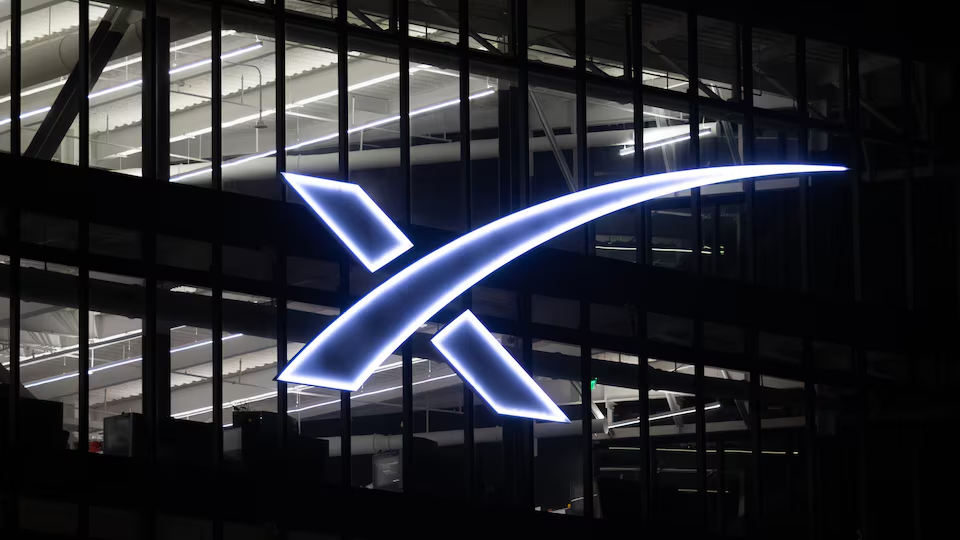
Ahead of SpaceX’s Nasdaq debut, Jay Woods — chief market strategist at Freedom Capital Markets — joined a chorus of Wall Street voices expressing caution about jumping into the IPO. “This is a tricky one,” Woods told CNBC Pro subscribers before the offering. “If you want to be in it, get in it small… I would not be chasing it at these levels.”
SpaceX priced its IPO at a fixed $135 per share, selling 555.6 million shares — a valuation that would make the company worth roughly $1.77 trillion, positioning it as the seventh-biggest company in the US by market cap, ahead of Tesla, Elon Musk’s other major company.
The IPO Itself: A Record-Breaker
SpaceX’s debut on June 12, 2026 became the biggest initial public offering in history. Shares jumped 19% during the session to close at $161, pushing the company’s valuation to just over $2 trillion. The stock climbed another 8% the following Monday. Nasdaq President Nelson Griggs told CNBC the opening trade came together “faster and more efficiently than expected,” with Morgan Stanley leading the stabilization process. Roughly $15 billion of the raise reportedly came from retail investors — an unusually large allocation that Griggs said was likely driven by the same retail enthusiasm that has powered Tesla’s shareholder base.
Why Woods Was Cautious
Woods wasn’t alone in flagging valuation concerns. Morningstar analysts called SpaceX “significantly overvalued” in a note to clients, valuing the company at around half of its expected debut price and suggesting investors would get better entry points after the IPO rather than during it. Truist Wealth separately noted that stocks tied to major IPOs tend to struggle in their first year of trading.
Woods advised investors to “leg into” the company gradually rather than buying all at once. “There will be pullbacks,” he said. “It’s going to be truly volatile.”
A More Personal Warning
In later comments, Woods revealed just how mainstream the SpaceX hype had become — even reaching his own family. “When you hear your own parents asking you questions about it, you know it’s a little overhyped,” he said, adding: “I’m a little fearful that this could be a negative experience for a lot of people.” He told readers of his newsletter, including his own father, to keep their allocations smaller than they might have wanted.
Not a SpaceX Bear — Just Cautious on Timing
Despite the warnings, Woods has been clear he isn’t betting against the company long-term. “If you believe in Elon Musk, you don’t bet against him,” he told Benzinga, adding that he expects SpaceX to be “the biggest grower over time” and that Starlink alone could become a trillion-dollar business on its own. His core message was about price discipline, not skepticism of the business itself: “This stock will eventually double from where it is. But I don’t know the time frame as to when that will happen, and I think there are better opportunities right now for a trader than to be in space.”
Woods also said he expects the market to eventually reset expectations around the stock: “They’ll come back to Earth at some point. Yes, puns intended.”
The S&P 500 Inclusion Debate
Woods was also vocal about a separate controversy: whether major indexes should fast-track SpaceX’s inclusion. He argued against loosening standards for index membership. “I think you know we have standards for a reason,” he said, adding that early S&P 500 inclusion could have forced additional buying and made the stock even more volatile at IPO by encouraging early profit-taking. SpaceX was set to join the Nasdaq 100 — tracked by the Invesco QQQ Trust — on July 7, a milestone Woods called fitting given the index’s own high profile.
Broader Market Context
SpaceX’s offering arrived alongside a broader wave of anticipated mega-IPOs, with OpenAI and Anthropic both reportedly racing toward their own public listings. Gabelli Funds portfolio manager Justin Bergner suggested the rush reflected genuine competitive anxiety: “They’re worried that whoever doesn’t go first will benefit from reduced demand, or kind of demand fatigue in the market.” Despite the scale of SpaceX’s roughly $75 billion capital raise, Gavekal Research estimated it would absorb just over two weeks’ worth of typical S&P 500 shareholder payouts — suggesting the broader market had capacity to handle the new supply without major disruption.
Where the Stock Stands Now
Following the IPO, analyst coverage has been mixed. As of early July, analysts had set an average price target of $236.45 for SPCX shares, alongside continued caution about the company’s high capital requirements and technical execution risks. Woods himself has continued tracking specific technical levels for traders — including the stock’s volume-weighted average price and a $175.50 threshold that, if held for five to ten trading days, would allow company insiders to begin selling up to 10% of their shares.
The Bottom Line
Woods’ pre-IPO warning proved broadly consistent with how the stock actually traded: a dramatic, headline-grabbing debut followed by continued volatility rather than a straight line upward. His advice throughout — size positions conservatively, expect pullbacks, and separate long-term conviction in the business from short-term price discipline — reflects standard guidance for any high-profile IPO, but carried particular weight given SpaceX’s unprecedented scale and retail investor enthusiasm.